Unstoppable Africa 2026 Brings Business, Investment and African Growth to the Center of UNGA Week
New York – Paula Sweis – From UN
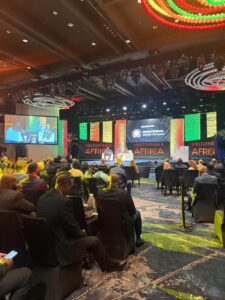
NEW YORK — Business leaders, heads of state, investors and United Nations officials gathered in New York on September 20 and 21 for Unstoppable Africa 2026, the flagship event of the Global Africa Business Initiative, with discussions centered on investment, industrialization and Africa’s growing role in the global economy.
Held at the New York Marriott Marquis ahead of the 81st session of the United Nations General Assembly, the two-day gathering was organized and coordinated by the United Nations Global Compact under the theme, “Powering Business, Scaling Economies, Shaping the Future.”
The event brought together leaders from government and the private sector at a time when Africa is increasingly being viewed not simply through the lens of development, but as an important market for global investment, trade and business expansion.
That distinction was central throughout the conference.
Africa holds significant reserves of minerals needed for the global energy transition, a young and growing population, expanding consumer markets and considerable renewable energy potential. Yet much of the discussion at Unstoppable Africa focused on a continuing challenge: how African economies can retain more of the value generated from their resources rather than primarily exporting raw materials.
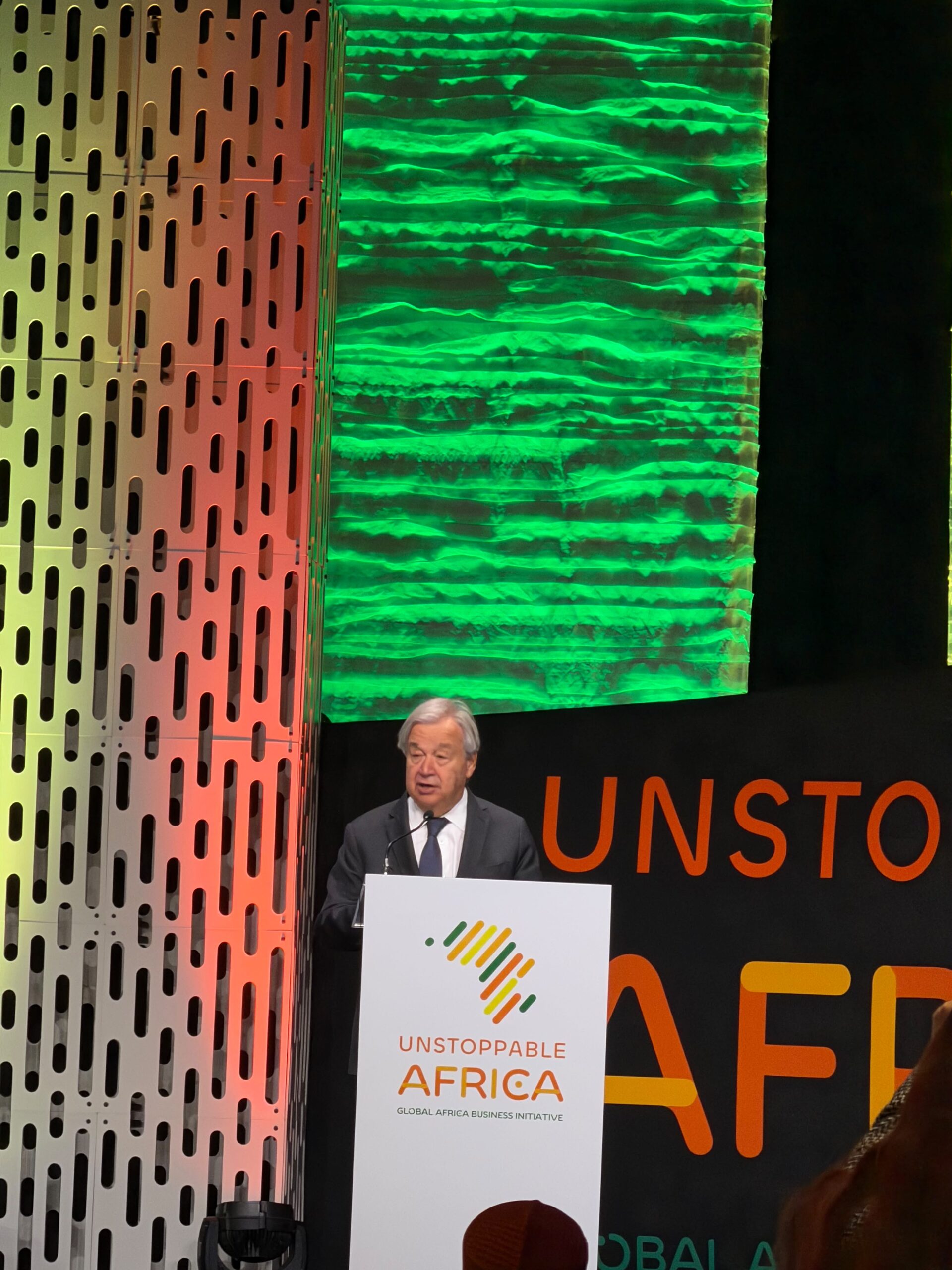
United Nations Secretary-General António Guterres addressed the gathering during the high-level opening, alongside Mahmoud Ali Youssouf, Chairperson of the African Union Commission. Youssouf emphasized Africa’s natural resources, youthful population and market of approximately 1.5 billion people, while calling for stronger African value chains and greater industrial transformation.
The message reflected one of the larger themes of this year’s gathering: economic growth alone is not enough if the value created by that growth continues to leave the continent.
Investment in local processing, infrastructure and African-owned businesses featured prominently in conversations about how countries can move further along global value chains. The event also examined trade, energy, digital transformation, creative industries and sports as areas capable of attracting investment and creating economic opportunities.
The investment discussion was particularly significant as businesses and governments reconsider global supply chains and where future growth will come from. GABI positioned African markets as increasingly important to those decisions, particularly as competition grows around critical minerals, energy resources and emerging consumer markets.
Finance was also an important part of the conversation.
Makhtar Diop, Managing Director of the International Finance Corporation, was among the senior financial leaders participating in the event. Other speakers from the business and investment community included executives from the Africa Finance Corporation, Citi, Standard Chartered, Standard Bank Group and other institutions active across African markets.
Their participation reflected a larger question facing the continent: how to mobilize enough capital to build infrastructure and businesses at the scale required for African companies to compete globally.
For investors, the conversation around Africa is increasingly moving beyond whether opportunities exist and toward how capital can be structured and deployed to support businesses capable of scaling across borders.
Unstoppable Africa also placed significant attention on technology and digital infrastructure. As artificial intelligence and digital platforms become more important to economic competitiveness, discussions addressed the need for African countries and companies to participate not only as users of new technologies but also in their development, infrastructure and ownership.
The gathering formed part of a broader series of business and diplomatic events taking place across New York during UN General Assembly week, when political leaders, investors, international organizations and private-sector executives converge in the city.
More than 3,000 participants were expected at Unstoppable Africa, including heads of state, CEOs, investors, entrepreneurs, journalists and UN officials.
For me, attending the opening day offered an opportunity to observe how closely discussions around development are now connected to investment, private capital and business strategy.
Many of the challenges discussed — infrastructure financing, industrialization, trade, technology and access to capital — cannot be addressed by governments alone. They require cooperation between public institutions, investors and businesses capable of turning policy ambitions into projects and companies that can operate at scale.
That may ultimately be one of the most important themes emerging from Unstoppable Africa 2026.
Africa’s economic future is not simply a conversation about potential. Increasingly, it is a conversation about ownership, investment and who will participate in creating — and retaining — the value generated by the continent’s next stage of growth.