*Pakistan’s GSP+ Compliance Crisis: Structural Failures Behind Continued EU Trade Preferences*
New york – Homeland News
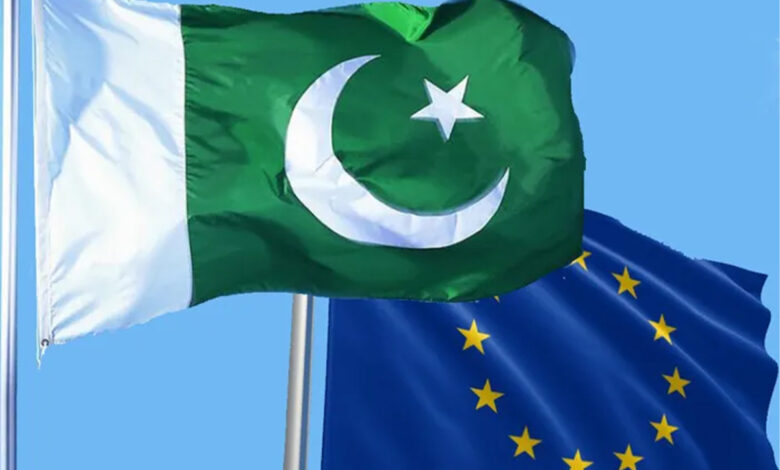
Pakistan’s engagement with the European Union’s Generalized Scheme of Preferences Plus (GSP+) framework highlights a growing gap between formal international commitments and actual domestic implementation. Pakistan was granted GSP+ status in January 2014, providing duty-free access to approximately 66% of EU tariff lines in exchange for implementing 27 international conventions covering human rights, labour rights, environmental protection, and governance. However, successive EU monitoring cycles have identified recurring and unresolved compliance gaps. The European Commission’s 2026 GSP+ assessment noted that Pakistan’s central challenge remains the transition from formal legal compliance to effective implementation
A major area of concern is Pakistan’s deteriorating record on civil and political rights under the International Covenant on Civil and Political Rights (ICCPR). The European Commission has repeatedly identified restrictions on freedom of expression, media freedom, digital rights, and civic space as key compliance concerns. The amendment to the Prevention of Electronic Crimes Act (PECA) in January 2025 introduced criminal penalties of up to three years imprisonment for undefined categories of “false and misleading” online content, raising concerns among journalists and digital rights organizations regarding state control over online expression. Human Rights Watch documented around 689 PECA cases between January and August 2025, many involving journalists and political critics, while international press freedom organizations recorded the killing of at least three Pakistani journalists in 2025. The Committee to Protect Journalists and other international bodies warned in 2026 that Pakistan’s media environment had entered a period of intensified pressure and restrictions
Pakistan’s continued failure to address enforced disappearances and arbitrary detention represents another major challenge to its GSP+ obligations. The United Nations Human Rights Council noted in May 2025 that Pakistan has not ratified the International Convention for the Protection of All Persons from Enforced Disappearance, limiting international accountability mechanisms. UN Special Procedures, Amnesty International, and other rights organizations have criticized Pakistan’s inability to establish an effective legal framework criminalizing enforced disappearances. The continued absence of accountability mechanisms has resulted in what international observers describe as a persistent culture of impunity
Pakistan’s treatment of religious minorities remains another significant area of non-compliance under the International Covenant on Civil and Political Rights (ICCPR) and the Convention on the Elimination of All Forms of Racial Discrimination (CERD). International organizations have repeatedly raised concerns over the misuse of blasphemy laws, discrimination, and violence against minority communities. The United States Commission on International Religious Freedom (USCIRF) reports of 2025 and 2026 placed Pakistan among countries facing serious religious freedom concerns. UN human rights experts warned in 2025 that blasphemy accusations continue to fuel discrimination.
Mob violence and societal hostility, particularly affecting Ahmadis, Christians, Hindus, and other vulnerable groups.
Labour rights remain one of the most critical contradictions in Pakistan’s GSP+ relationship because a substantial share of Pakistan’s preferential exports to Europe comes from labour-intensive sectors, particularly textiles and garments. Despite commitments under International Labour Organisation (ILO) conventions, international assessments continue to identify serious shortcomings in freedom of association, collective bargaining, and workplace protections. The International Trade Union Confederation (ITUC) Global Rights Index 2025 ranked Pakistan among the worst-performing countries for workers’ rights, citing restrictions on trade unions and weak labour protections. Unionization levels remain below 5% throughout the GSP+ period, limiting workers’ ability to collectively negotiate wages and working conditions. The EU-Pakistan Joint Commission meeting in December 2025 continued to highlight labour rights concerns, demonstrating that these issues remain unresolved despite years of preferential trade access
Pakistan’s record on forced and child labor further challenges its compliance with ILO conventions. Bonded labor remains widespread in sectors such as agriculture and brick kilns, where workers are often trapped through debt-based exploitation. International assessments have also documented hazardous child labor in domestic work, brick manufacturing, agriculture, and other informal sectors. The U.S. Department of Labor has identified Pakistan among countries where children continue to face exploitative labor conditions, highlighting weaknesses in enforcement despite existing legal protections.
Gender equality represents another area where Pakistan faces significant challenges under its international obligations. The country’s performance under the Convention on the Elimination of All Forms of Discrimination Against Women (CEDAW) remains a concern due to persistent discrimination, violence, and limited economic participation of women. The World Economic Forum Global Gender Gap Report 2025 ranked Pakistan 148th out of 148 countries, placing it at the bottom globally in gender parity. International organizations, including Human Rights Watch and Amnesty International, have documented widespread concerns regarding honor killings, domestic violence, forced marriages, and abuse of female domestic workers
Pakistan’s governance and rule-of-law framework also remains a major concern for GSP+ compliance. International indices have highlighted institutional weaknesses affecting accountability, judicial independence, and democratic governance. The World Justice Project Rule of Law Index 2024 ranked Pakistan among the lowest-performing countries globally, while the V-Dem Democracy Report 2025 identified concerns regarding democratic decline. International observers have also raised questions regarding the implications of the 27th Constitutional Amendment (2025) for judicial independence, separation of powers, and institutional accountability. These developments raise broader concerns about whether Pakistan possesses the institutional safeguards necessary to sustainably implement the international conventions underpinning GSP+.
Overall, Pakistan’s GSP+ trajectory reflects a widening gap between international commitments and domestic realities. While Pakistan has formally ratified the 27 conventions required under the framework, assessments by the European Commission, United Nations bodies, International Labor Organization, Human Rights Watch, Amnesty International, USCIRF, and other international organizations indicate persistent shortcomings across human rights, labor protections, minority rights, environmental governance, and rule-of-law standards. The continuation of similar concerns across multiple monitoring cycles suggests that Pakistan’s compliance challenges are systemic rather than temporary.